
Connor Naismith MP Labour Member of Parliament for Crewe and Nantwich
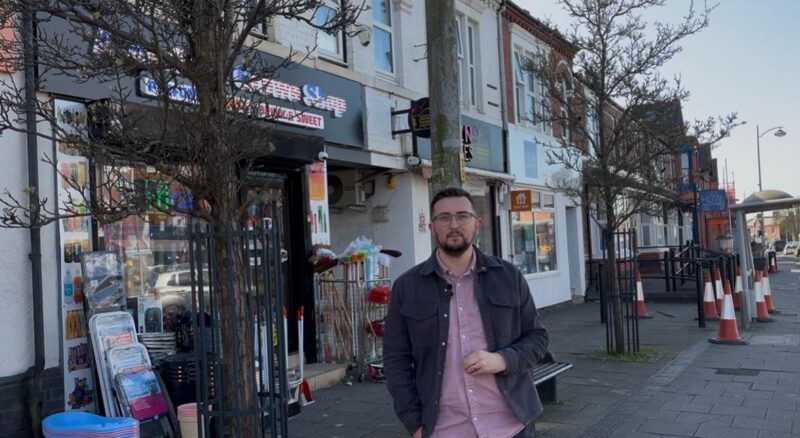
Town centres are the heartbeat of our communities. They are a microcosm of that place’s identity. It’s sense of self.
That’s why the demise of these spaces leaves residents feeling personally affected. When your local high street feels run down, it’s easy to lose pride in the place you live. Areas that were once hubs of activity to spend a lunch break or a weekend no longer cater to colleagues catching up over coffee or families spending time with loved ones. In too many towns up and down our country, they are now filled with betting shops, charity shops, vape shops, or in many cases empty shop windows devoid of life.
This becomes a vicious cycle for generating demand. Longstanding independent spots are forced to close as their customers dwindle and larger chains are put off by an unattractive business case.
These swathes of boarded up high streets have provided the perfect opportunity for organised crime to infiltrate our communities. Simultaneously, dodgy shops that have appeared on our high streets prey on the vulnerabilities which exist within our communities, while also exploiting the people who work within them and avoiding paying their fair share of taxes.
We know that cash-intensive ventures with low operating costs are their bread and butter. Hence the influx of vape shops, nail salons and mini-marts in our town centres.
Sadly, I was also not surprised when a BBC investigation uncovered a criminal gang operating a network of over 100 illegal mini-marts across the UK in November last year, including across constituency of Crewe & Nantwich.
Far from a like-for-like replacement, we are losing the third spaces that foster social integration and community spirit for the price of a pack of contraband cigarettes or a cheap haircut.
Research from the Centre for Social Justice shows that since 2016, Britain has lost nearly 1,800 pubs and bars, while there are an additional 245 shops that specialise in selling tobacco products, rising to nearly 2,200 in total.
What’s worse: despite the fact that town centre shops are an integral part of the social fabric of our communities, our institutions often lack the control to adequately plan these spaces in the interests of the people we represent. With the vast majority of commercial property being owned and let by private landlords, sadly there remains a free market logic to town planning. Local authorities are often simply unable to influence the usage of town centre shop units, with fundamental decision making powers over rent, repairs and other drivers for investment being taken by speculative landlords, many of whom from private equity and based over-seas.
Government intervention is essential to protect local establishments and keep organised crime off our high streets. Labour has already allocated £6 billion in Pride in Place funding to support local businesses on our high streets and regenerate 284 disadvantaged neighbourhoods across the country. Town centres will also benefit from a £150 million cash injection to support the worst affected areas where the high street has shut down.
High Street Rental Auctions and Community Right-To-Buy powers have been extended, giving local groups greater time to raise funds to protect communal areas like pubs and libraries. New powers include the ability to seize boarded-up shops and block nuisance businesses.
However, we must go further to save our high streets and listen to the countless small business owners calling for a review of business rates, and VAT in the hospitality sector. As well as protecting the assets themselves, we must recognise the efforts of the people running them. Small independent business owners take a huge risk to, of course, make a profit but also to give something back to their community and to more often than not keep the wealth they create within those same communities with good jobs for local people.
In the same vein, the fronts for organised crime groups must be shut down. During the year to September 2025, the government oversaw the largest enforcement crackdown on illegal working since records began, with a significant increase year on year of 63% and 51% for arrests and visits, respectively.
Local authorities need an expansion of powers to hold illegal enterprises to account. Historic cuts to local government funding should be addressed to give Trading Standards the resources to investigate rogue businesses and pursue prosecution or the appropriate punitive measures.
Greater transparency is required to give residents oversight on who owns their high streets. Commercial landlords should be held accountable for conducting insufficient background checks on their tenants, with a crackdown on absent landlords. Those who hold onto empty properties in important locations should be forced to sell them. All too often, where inadequate landlords are identified, the resolution process takes years due to concerns over legal action or costs to the local authority.
Community groups in Crewe & Nantwich are determined to restore their town centre to the symbols of pride it once was. The upcoming High Streets Strategy from the government must give them the tools to do so.
Sign up to my e-newsletter
"*" indicates required fields