
Connor Naismith MP Labour Member of Parliament for Crewe and Nantwich
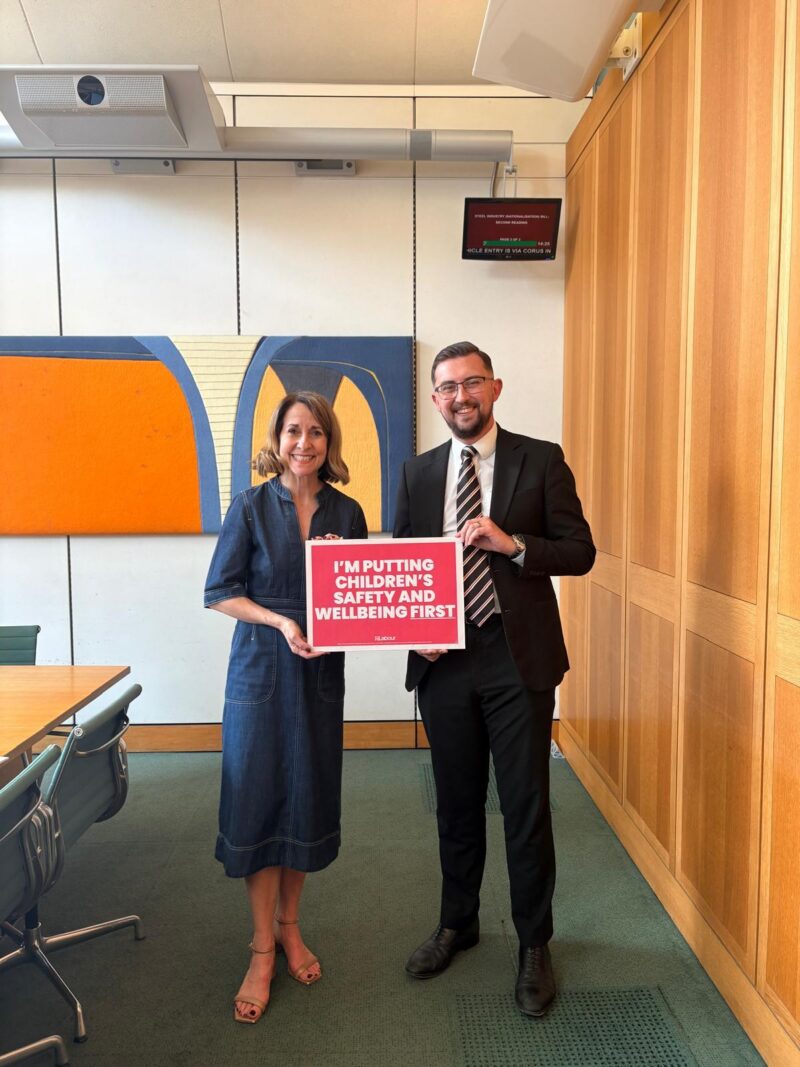
Labour has announced plans to ban social media for under-16s this week, following a consultation of 116,211 stakeholders, including parents, teachers, and children. Nine in 10 parents who responded to the survey support these proposals.
The ban covers platforms like Instagram, TikTok, Snapchat, YouTube and Bluesky. There will be exemptions for private messaging apps like Whatsapp so that children can stay in contact with family and friends or educational sites like YouTube Kids.
Social media has evolved to become a force of nature in how we communicate. As a Member of Parliament, I’ve developed a love-hate relationship with it. On the one hand, it allows me to communicate with many of you instantly – to get my message out there and to respond to your queries within minutes. However, it also feels like a constant uphill battle against misinformation, bots, and trolls (though you quickly develop a thick skin in this job).
That being said, nothing has shaped my opinion on this debate more than becoming a father. Don’t get me wrong: technology is an important tool for learning and development and helping children stay in touch with loved ones. But up to this point, our children have been encouraged to enter every corner of social media with limited restrictions.
I want my daughters to grow up without worrying about who they’re talking to online. They should have the freedom to play and not risk falling victim to screen rot (or infinite scrolling). They should be allowed to develop friendships with their peers outside of the pressures and influences of social media.
My daughters – and every child – have the right to a safe space at home where online threats, whether it’s misinformation, online predators, hate crimes, bullying, or anything else, can’t follow.
My office ran an Online Safety Forum in Crewe & Nantwich earlier this year, where over 500 students across the constituency participated in a survey designed by their peers. The results were staggering and – for me – confirmed the need for this ban.
57% of respondents said they’d been approached by strangers online. 34% had been asked to share personal information, photos or videos by people they didn’t know. 40% said they’d seen inappropriate content without searching for it. 37% said they or someone they know had been bullied, threatened or blackmailed online. 41.8% reported seeing misogyny online and 62.0% reported seeing racism online.
In my discussions with the young people who helped to design this survey, it was distressing to hear they were surprised the numbers weren’t even higher.
As parents, we can’t have oversight of every online space our child has access to as technology is constantly evolving, especially with the advancement of AI.
These new restrictions make it absolutely clear that responsibility lies with social media companies to limit children’s use to safe platforms. Big tech will no longer be able to monetise the attention spans of young people or exploit their vulnerability using algorithms and unsupervised public spaces.
In order to comply with the new rules, social media companies will need to implement strict age verification measures. Many adults won’t need to do checks because they’ve already got an account that:
- has been open more than 16 years
- has a credit card connected to it
- or is linked to an email address that’s age-verified in other ways.
Some adults will have already done age verification checks under the existing Online Safety Act, so wouldn’t need to do them again.
Ofcom will set out in the coming months different options for effective forms of age assurance for proving whether someone is over 16 that are accurate, robust, reliable, and fair.
If you don’t have kids, these new verification measures may seem like an inconvenience or even an intrusion. Having spoken to many young people in our Online Safety Forums, I am in no doubt that it is a small price to pay as adults to protect our children.
As one of them told me: “Things we see online impact how safe I feel outside and inside of school.”
Tech companies have been reluctant to intervene, but these regulations mean that inaction is no longer an option.
Throughout this debate I have been led by my experiences as a father and guided by conversations with students, parents and teachers in the constituency. As a parent, you’re constantly balancing trade-offs between freedoms and protections. Social media access so far has been firmly biased against the latter. This new ban will allow children to grow up in the real world and give them a healthy life online.
If you have any questions about how the ban will impact you or your family, please don’t hesitate to get in touch at [email protected]
Sign up to my e-newsletter
"*" indicates required fields